
When Biofields Intersect
Examining Plant Distress Signaling, Human Perception, and Instantaneous Information Exchange in a Universe of Living Circuits

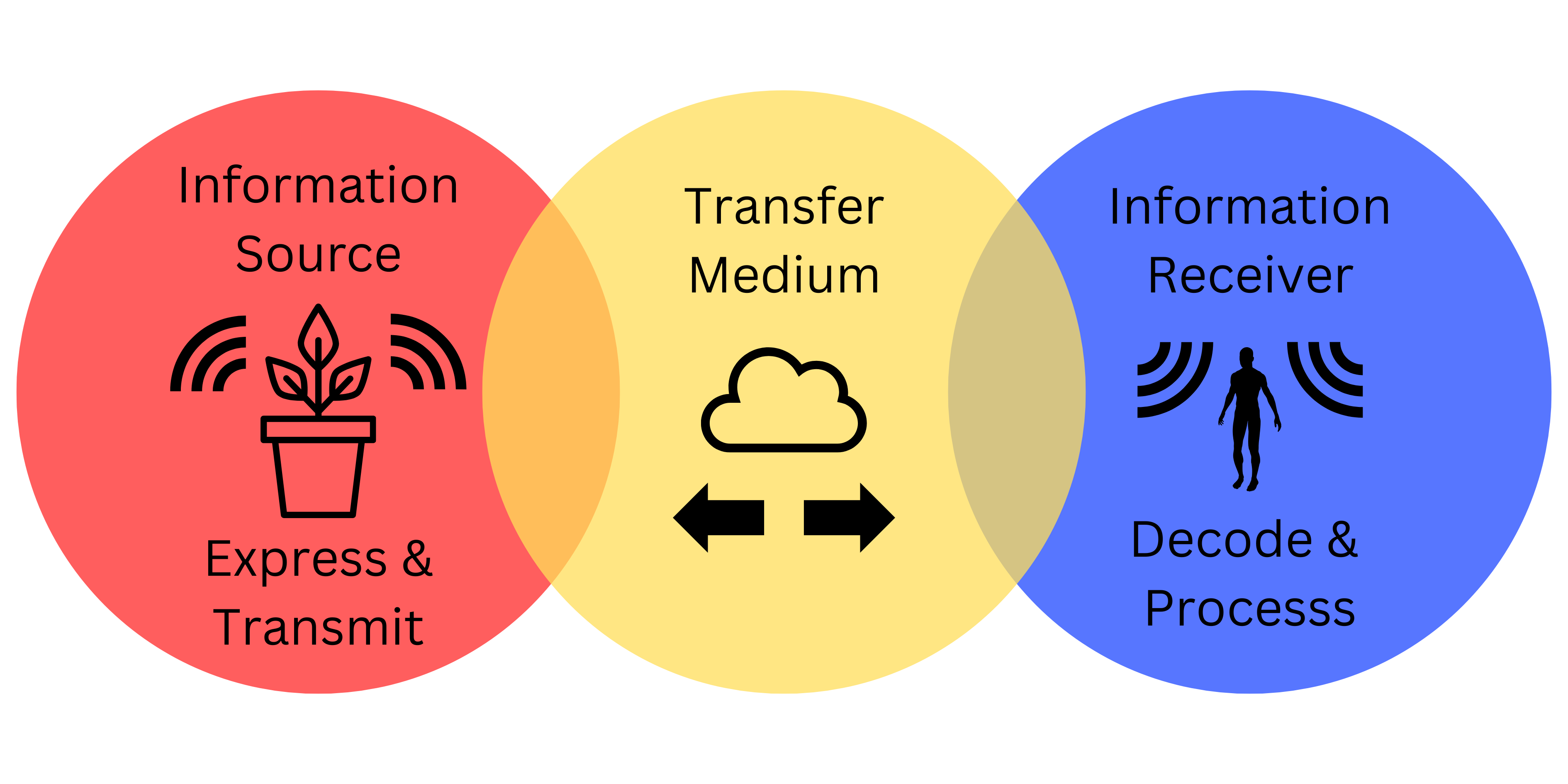
When Plants Scream: A Personal Encounter with Biofield Communication
One night, I encountered a mystery that still reverberates in my memory.
Someone gave me a marijuana plant. It was a sad leftover from their indoor grow attempt. With no plan for it, I simply placed the plant in the corner of my bedroom and went about my usual business. But that night, with the lights out and the house resting into its stillness, something rather unusual happened. I have absolutely no doubt that it was very real. But, what was it?
As I tried to fall asleep, a high-pitched frequency began to ring inside my head. It wasn’t quite in my ears, and it wasn’t tinnitus in the traditional sense. It was like a mischievous child got his hands on the school bell and rang it non-stop. And I was inside the bell. The sensation was between my ears and inside my brain, somewhere in that strange borderland between body and mind. I’d never experienced anything like it before or since.
At first, I tried to ignore it. Hours passed. Yet the noise persisted.
Then, without conscious deliberation, an idea surfaced. Not entirely as a logical deduction but as a kind of automatic, intuitive action. Something close to a Daoist state of flow. I got up, picked up the plant, and carried it outside. A bit like an automaton. Or a sleep walker. I didn’t analyze the moment. I simply responded.
As soon as the plant left the room, the incessant and disturbing sound stopped. My mind relaxed and I was able to fall asleep. The signal, or whatever the hell it was, vanished. Had I done what I was instructed to do? By a plant?
I had so many questions. But if there’s anything I can learn from this experience, it’s that it is perfectly natural to feel distress when the environment changes, and that it is equally natural to communicate that distress and ask for help.
Was the Plant Screaming?
I say “screaming” for lack of a better word. On the surface, this sounds absurd. I am aware of this. But when viewed through a broader lens, one that includes Electric Universe Theory, Predictive Evolution Theory (PET), Morphic Resonance, Cleve Backster’s research, and electroculture, some of which I have become well acquainted with, the event begins to make a strange kind of sense.
What’s this all about, you may ask? Let me start off by saying, this is the fun part. Or at least for me it is.

Electromagnetic Fields & Bioelectric Feedback
Full disclosure. I subscribe to the electric universe theory in plasma cosmology. From my perspective, electricity is energy and information. And so is the timeless substrate that others would refer to as a Quantum Field, or Higgs Field, or the Aether, and in most cases, God, among other forms of language. More often than not, I refer to it as an information reservoir, but I acknowledge that it leaves out energy.
When it comes to evolution, for instance, the term information reservoir (or information substrate) makes more sense to me. We’ll get to that further on because it very neatly reconciles the biological concepts we’re exploring. Assuming, of course, that this is an electric universe.
And so, plants are electromagnetic systems. Or simply put, electromes. They operate using subtle bioelectric fields, ionic gradients, and electromagnetic (EM) interactions. This is not speculative at all. Nor is it new. Plants generate action potentials, they react to EM stimuli, and they can alter their biofield outputs under stress.
Now, admittedly, I am only aware of electroculture, and so I recommend you follow up by looking into the first-hand insights and information coming from experienced and educated practitioners. I will be exploring this subject more in future posts, but for now I highly recommend you follow Electroculture Growers’s Substack.

What I do know is that in electroculture, practitioners use copper coils, antennas, and magnets to amplify plant growth by interacting with atmospheric electricity and telluric currents. This isn’t magic, and it certainly isn’t nonsense. It’s a functional relationship between plants and the electromagnetic environment.
Now imagine removing a plant from its natural feedback circuit, which includes, among other things, sunlight, soil currents, Schumann resonance harmonics, and then placing it into an artificial, enclosed space, like your friend’s closet with tinfoil lining and an LED light. Or, rather suddenly, the corner of your bedroom. You’ve changed its context dramatically.
Is it possible that the plant broadcasts a signal of distress when cut off from its environmental circuit? Do humans find ways to communicate their distress when they find themselves incompatible with their environment? I can certainly relate to that. And more often than not, I will mask visible and audible signals. But, is there more to how organisms communicate than meets the eye?
Cleve Backster and Primary Perception
This question echoes the research of Cleve Backster, a polygraph expert who in 1966 famously connected a houseplant to a lie detector. When he merely thought about burning the plant, the polygraph registered a spike. A stress response.
Backster, whom I have only recently become aware of, called this phenomenon Primary Perception. From what I understand, it’s the idea that living cells respond to emotion, intent, and environmental changes instantly, across distances, and sometimes telepathically.
Backster observed plants reacting not only to physical harm but also to thoughts, intentions, and the death of nearby organisms. I am all too familiar with this concept, having developed a theory of evolution myself. A work in progress. More on that later.
Mainstream science rather unsurprisingly rejected Backster’s work due to a lack of controlled replication. It ultimately didn’t fit the established paradigm. But the underlying observation persists nonetheless. Plants are bioelectrically aware. Or… conscious. And their fields seem to alter in ways that are hard to explain through standard biology. An all too common occurrence these days.
Sheldrake’s Morphic Resonance
Where have we seen something similar to Backster’s discoveries? Enter Rupert Sheldrake’s Morphic Resonance. It’s the idea that nature shares information through morphic fields. These are not constrained by distance, time, or material interaction in the usual sense. They are fields of memory and pattern. Information reservoirs that organisms tap into and update in real time.
In this view, a plant’s experience of distress might not remain local. It could ripple outward into the informational fabric of the environment. Making copies of itself with each information reservoir it is shared with. This suggests that the information about something can exist in multiple places at the same time within overlapping, nested, and coupled information reservoirs. These reservoirs are magnetic fields created by electric structures.
Electromagnetic Fields as Timeless Information Reservoirs

“In a world that often dismisses the extraordinary as mere fantasy, The Telepathy Tapes dares to explore the profound abilities of non-speakers with autism-individuals who have long been misunderstood and underestimated.” The Telepathy Tapes Podcast. (Credit: Ky Dickens)
As it was with Backster, I only stumbled upon Rupert Sheldrake fairly recently when exploring the revelations made by Ky Dickens in The Telepathy Tapes, and Sheldrake’s subsequent Joe Rogan appearance. Once again, I was all too familiar with the concept of Morphic Resonance having arrived at a similar function for my Predictive Evolution Theory (PET). Yes, I do call it my pet.
Decoding Life's Symphony: How Wave Genetics Harmonizes with PET (Pt. 2)

Medieval print of the Ouroboros symbol. (Image Credit: Canva)
PET: Information Reservoirs & Instantaneous Coupling
Predictive Evolution Theory (PET) further expands on the aforementioned. PET suggests that life doesn’t just react to change, it predicts it. Organisms broadcast and receive data from information reservoirs composed of biofields, EM signatures, and patterned information structures.
PET rests on two core principles:
Organisms receive environmental change signals from local electromagnetic fields, allowing them to predict shifts in predators, prey, or resources.
Organisms receive information about other organisms, including predator blueprints and symbiotic opportunities, enabling DNA-level adaptations like mimicry or novel traits.
In PET, DNA and consciousness function as information processors, coupling with electromagnetic fields to receive data about environmental shifts and other organisms. Using this information, organisms generate multiple variants per generation as evolutionary contingency plans. The variant that best matches real-world changes survives, while the others are discarded.
This process forms a continuous feedback loop, where organisms not only adapt but also upload new data back into the environmental electromagnetic fields, maintaining a feedback loop of continuous data exchange between life and the electromagnetic information reservoirs of the environment

At the cosmological level, PET aligns with Electric Universe Theory. The universe is not inert but a dynamic circuit of plasma, electricity, and field interactions. Galaxies, stars, planets, and life forms exist within, and more crucially contribute to, this feedback system. Consciousness emerges from the information-energy substrate, not as a side effect of brains, but as a universal property of systems and structures that process and share information.
What does this imply? The electric substrate isn’t conscious. Consciousness is a function that emerges from the substrate through EM properties that form increasingly complex structures designed to process information (and energy). Scaling up and down in fractals.
So, yeah. Plants are conscious. They are EM structures that have emerged from and are coupled with the information-energy substrate. They are information processing systems. And, yeah… Rocks are, too. So is the planet, and so is the Sun. All the way up to the Universe. Which is itself a structure that has emerged from the substrate through EM principles. And so, it is conscious, too.
Biofield Coupling: Why Did I Hear It?
If all of this holds, then what happened with the plant that night wasn’t just some random hallucination or coincidence. It was more like an interaction between biofields. A direct, real-time exchange of information between two living systems.
The plant was in distress. It had been removed from its natural circuit, placed in an artificial environment where it couldn’t process the usual solar, telluric, and atmospheric inputs it was designed to receive. It wasn’t functioning in its normal rhythm anymore.
That stress may have caused its bioelectric field to shift, possibly broadcasting a kind of distress signal. This aligns with what Cleve Backster observed in his experiments when plants responded not just to physical harm, but to human intention and emotional states. Plants, in Backster’s view, don’t operate in isolation. They seem to send out signals when they’re stressed, tapped into, or threatened.
Somehow, my own biofield may have coupled with the plant’s. The connection didn’t come through language or conscious awareness at first. It completely bypassed all of that. What I perceived as a “scream” wasn’t exactly sound in the usual sense. It was information. And it was more like a bioelectrical perturbation, a signal that registered somewhere between the ears and the brain, as pressure, high-frequency ringing, or a subtle brain-level awareness.
This isn’t out of the question when you consider the magnetite crystals in the pineal gland, the vagus nerve’s sensitivity to field changes, or even the inner ear’s relationship to electromagnetic input. There are parts of the body that may function as biofield receivers, capable of perceiving shifts in nearby energy patterns, not as sound, but as sensations in the nervous system or consciousness itself.
So, rather than thinking of this as a strange one-off experience, it might actually represent a glimpse into how living systems share information beneath the surface of ordinary perception. It’s not magic. It’s just a form of field-based communication that we’ve barely begun to understand.
A Possible Conclusion
If all of this holds, then what happened with the marijuana plant that night wasn’t just some random hallucination or coincidence. It was more like an interaction between biofields. A direct, real-time exchange of information between two synchronized living systems.
The plant was in distress. It had been removed from its natural circuit, placed in an artificial environment where it couldn’t process the usual solar, telluric, and atmospheric inputs it was designed to receive. In a sense, it was like pulling a component out of its circuit and forcing it into a different circuit. It wasn’t functioning in its normal rhythm anymore.
That stress may have caused its bioelectric field to shift, possibly broadcasting a kind of distress signal. This aligns with what Cleve Backster observed in his experiments when plants responded not just to physical harm, but to human intention and emotional states. Plants, in Backster’s view, don’t operate in isolation. They seem to send out signals when they’re stressed or threatened.
Somehow, my own biofield may have coupled with the plant’s. The connection didn’t come through language or conscious awareness at first. It bypassed all of that. What I perceived as a “scream” wasn’t exactly sound in the usual sense. It was more like a bioelectrical perturbation. A signal that registered somewhere between the ears and the brain, as pressure, high-frequency ringing, or a subtle brain-level awareness.
This isn’t out of the question when you consider the magnetite crystals in the pineal gland, the vagus nerve’s sensitivity to field changes, or even the inner ear’s relationship to electromagnetic input. There are parts of the body that may function as biofield receivers, capable of perceiving shifts in nearby energy patterns, not as sound, but as sensations in the nervous system or consciousness itself.
So rather than thinking of this as a strange once-off experience, it might actually represent a glimpse into how living systems share information beneath the surface of ordinary perception. It’s not sorcery. It’s not science fiction. It’s just a form of field-based communication that we’ve barely begun to understand.
In a Nut’s Shell
Was the plant screaming? Perhaps not in the conventional sense. But from an information-energy perspective, it may have been broadcasting bioelectric distress signals through the informational substrate we both share.
The universe, under this model, is not silent. It is alive with feedback, and sometimes, when conditions align and we are open to the universe or to God, however one perceives it, we can hear it. All we need are the proverbial ears to hear it.
References:
Backster, Cleve. Primary Perception: Biocommunication with Plants, Living Foods, and Human Cells. White Rose Millennium Press, 2003.
(The foundational work on plant consciousness and non-local response in plants.)Sheldrake, Rupert. Morphic Resonance: The Nature of Formative Causation. Park Street Press, 2009 (originally 1981).
(Introduces the concept of information fields guiding biological and behavioral patterns.)Sheldrake, Rupert. The Presence of the Past: Morphic Resonance and the Habits of Nature. Inner Traditions, 2011.
(Further elaboration on fields of memory and interconnection across time and space.)Buhner, Stephen Harrod. The Secret Teachings of Plants: The Intelligence of the Heart in the Direct Perception of Nature. Bear & Company, 2004.
(Explores biofield perception, plant consciousness, and non-analytical modes of understanding.)Fröhlich, Herbert. "The Biological Effects of Microwaves and Related Questions." Advances in Electronics and Electron Physics, Vol. 53, 1980.
(Seminal work on coherent electromagnetic fields in biological systems.)Persinger, Michael A. "On the Possibility of Directly Accessing Every Human Brain by Electromagnetic Induction of Fundamental Algorithms." Perceptual and Motor Skills, 1995.
(Discusses electromagnetic field sensitivity and consciousness.)
Becker, Robert O. The Body Electric: Electromagnetism and the Foundation of Life. William Morrow, 1985.
(A classic work on bioelectricity, regeneration, and electromagnetic fields in biology.)Oschman, James L. Energy Medicine: The Scientific Basis. Churchill Livingstone, 2000.
(Explores the biofield, cellular communication, and electromagnetic healing.)Tiller, William A. Conscious Acts of Creation: The Emergence of a New Physics. Pavior Publishing, 2001.
(Discusses intention, consciousness, and electromagnetic interaction in biological systems.)
Peratt, Anthony L. Physics of the Plasma Universe. Springer, 2014 (2nd ed).
(Describes cosmic plasma behavior and electromagnetic structuring of the universe.)Heinrich, Justin Christofleau. Electroculture and Magnetoculture: Rediscovering the Secrets of Nature to Grow Healthy Plants Faster. 2018.
(Explores plant growth using electromagnetic field manipulation.)Thornhill, Wallace & Talbott, David. The Electric Universe. Mikamar Publishing, 2007.
(A primer on Electric Universe concepts, cosmic circuits, and plasma cosmology.)
Ho, Mae-Wan. The Rainbow and the Worm: The Physics of Organisms. World Scientific, 2008.
(Examines organisms as dynamic, coherent electromagnetic systems.)Mitchell, Edgar & Staretz, Robert. "The Quantum Hologram and the Nature of Consciousness." Journal of Cosmology, Vol. 14, 2011.
(Proposes information exchange through field-based consciousness models.)Laszlo, Ervin. Science and the Akashic Field: An Integral Theory of Everything. Inner Traditions, 2004.
(Describes the universe as an information-rich, interconnected field.)
Mayer, Elizabeth Lloyd. Extraordinary Knowing: Science, Skepticism, and the Inexplicable Powers of the Human Mind. Bantam, 2007.
(Investigates anomalous perception and consciousness phenomena.)Pollack, Gerald. The Fourth Phase of Water: Beyond Solid, Liquid, and Vapor. Ebner & Sons, 2013.
(Introduces structured water as a potential medium for biofield interactions.)Rollin McCraty et al. "The Energetic Heart: Bioelectromagnetic Interactions Within and Between People." HeartMath Research Center, 2003.
(Discusses heart-brain communication and field coupling in living systems.)