
In Murphy We Trust
Reinterpreting Murphy's Law as a universal principle of possibility through engineering, plasma cosmology, the information-energy substrate, PET, Taoism, and an impersonal conception of God

What Is Murphy’s Law?
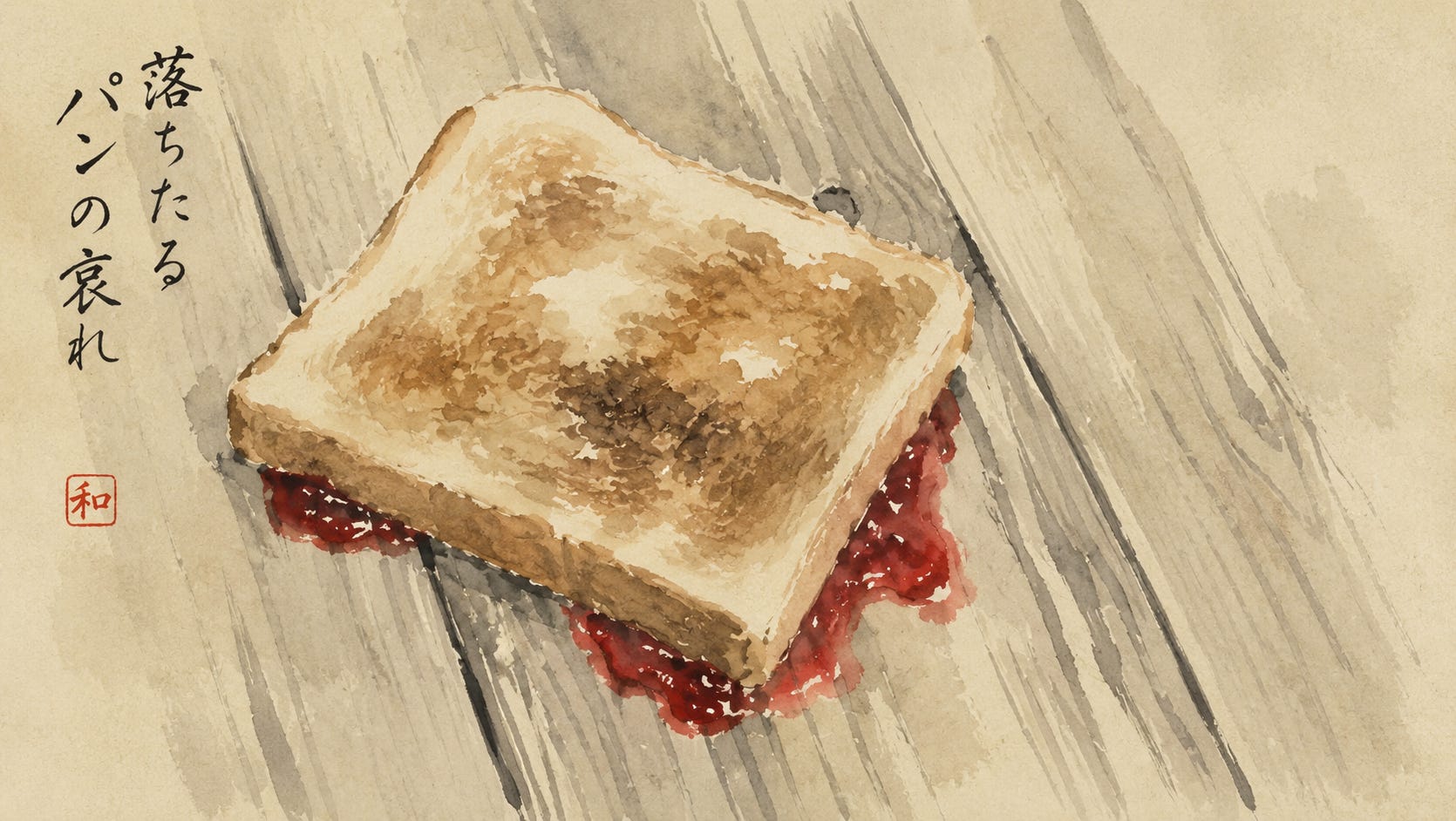
Murphy’s Law is usually introduced with a smirk: “Anything that can go wrong will go wrong.” It has become shorthand for bad luck, unfortunate timing, and the strange tendency for life’s smallest inconveniences to arrive precisely when they are least welcome. Yet this popular version obscures its true origin. Murphy’s Law began not as a philosophy of pessimism, but as an engineering principle. An invitation to understand reality by asking what is genuinely possible and preparing accordingly.
That simple shift in perspective opens a surprisingly large door. What if Murphy’s Law is not primarily about things going wrong, but about the realization of possibility? What if it describes something fundamental about the way reality operates, from electric currents finding available pathways to stars forming, species evolving, civilizations emerging, and human lives unfolding? Perhaps reality does not move according to preference at all, but according to what can happen under the conditions that exist.
In this article, I follow that thread from its practical engineering roots into much broader territory. Along the way, it touches electricity, plasma cosmology, the nature of “God,” Predictive Evolution Theory, and human behaviour. The common theme is remarkably simple: Reality appears to express possibilities rather than desires. Whether we are considering the birth of a galaxy, the evolution of an organism, or the choices of an individual, the same question repeatedly emerges: What can happen?
This perspective also brings me to something that feels strikingly close to the Taoist idea of the Way. An impersonal, lawful unfolding of reality that needs no preferences, no emotions, and perhaps no personality at all. It is not a deity issuing commands from beyond the universe, but the very process through which information, energy, and possibility become the world we experience.
And if that nameless principle deserves a nickname, something a little more tongue-in-cheek than the Way, the Logos, or the information-energy substrate, why not Murphy? After all, who better than the universe’s non-personified engineer to quietly remind us that reality doesn’t care what we want... Only what it can do?
More Than a Law of Misfortune
Murphy’s Law is one of the best-known principles in engineering and popular culture. It is commonly expressed as:
“Anything that can go wrong will go wrong.”
Although this is the version most people recognize, it is a simplification of the original idea, which was practical rather than pessimistic.
Murphy’s Law is generally attributed to Captain Edward A. Murphy Jr., a U.S. Air Force aerospace engineer, during rocket sled experiments at Edwards Air Force Base in California in 1949. After an experiment failed because sensors had been installed incorrectly, Murphy reportedly remarked, “If there is any way to do it wrong, he will.“ Over time, this evolved into the familiar saying, “If anything can go wrong, it will.“
The project’s lead, Dr. John Paul Stapp, later popularized the phrase to emphasize an important engineering principle: Assume that mistakes are possible and design systems to prevent or minimize their consequences. In its original context, Murphy’s Law encouraged careful planning, redundancy, and resilience rather than pessimism.
Today, Murphy’s Law is often understood as the observation that problems seem to occur at the worst possible moment. Everyday examples include a phone battery dying when it is needed most, forgetting an umbrella on the day it rains, or a computer failing just before important work is due. Psychologically, these events stand out because people tend to remember inconvenient experiences more vividly than the many occasions when everything goes as planned.
Engineers, however, use Murphy’s Law differently. Instead of expecting failure, they ask a simple question: “What could fail?” They then design systems to account for those possibilities through backup power, redundant controls, safety mechanisms, error checking, and other safeguards. In this sense, Murphy’s Law is a principle of preparation rather than pessimism.
A broader interpretation has also emerged over time. Rather than focusing only on failure, some people, myself included, summarize the idea as:
“Anything that can happen will eventually happen.”
This interpretation is closer to probability theory than to the original engineering principle. Given enough time and enough opportunities, rare events become increasingly likely, unlikely coincidences accumulate, and low-probability outcomes eventually occur.
Viewed this way, the principle applies equally to positive and negative events. Unexpected setbacks, fortunate discoveries, chance encounters, technological breakthroughs, and rare failures all become possible outcomes as opportunities accumulate. The emphasis shifts from bad luck to the realization of possibility.
From the perspective of probability, Murphy’s Law reflects the fact that complex systems contain many potential failure modes. Successful operation often requires numerous conditions to be satisfied simultaneously, whereas failure may require only a single weak point. As systems become more complex, occasional breakdowns become increasingly likely simply because there are more ways for something to fail than to succeed.
Several philosophical traditions have interpreted Murphy’s Law in broader ways. Stoicism sees it as a reminder to prepare for setbacks rather than be surprised by them. Existentialism views it as recognition that the universe has no obligation to conform to human expectations. Systems theory emphasizes that complex systems inevitably contain hidden vulnerabilities, while information theory highlights the tendency for errors to accumulate unless mechanisms exist to detect and correct them.
For these reasons, Murphy’s Law is not necessarily a negative principle. It is often mistaken for pessimism, but it can also be understood as a neutral observation about reality: Possibilities become actual when conditions allow them to do so. Successes, failures, opportunities, and disasters are all part of the range of outcomes that may emerge.
A more neutral way of expressing the principle is: Anything that is genuinely possible has the potential to occur under the appropriate conditions. Or, more broadly: Given enough time and opportunities, unlikely possibilities become increasingly likely.
Understood in this way, Murphy’s Law becomes more than an engineering guideline or a humorous saying. It becomes a reminder that reality contains many potential outcomes, and as conditions change, different possibilities become actual. Its practical lesson remains the same: prepare for failure where it matters, while remaining open to unexpected opportunities, fortunate coincidences, and creative breakthroughs.
The God Of What Can Happen
As we’ve discussed, Murphy’s Law is often reduced to the pessimistic phrase, “Anything that can go wrong will go wrong.“ Yet its engineering origins point to something far more useful. At its heart, Murphy’s Law is not about misfortune but about possibility. Engineers do not ask what they hope a system will do; they ask what the system can do. Every possible failure is considered because, if the conditions exist for that failure to occur, then sooner or later it is likely to occur. The purpose is not to fear reality, but to understand it well enough to work with it.
I extend this principle far beyond engineering. To me, Murphy’s Law describes a fundamental characteristic of reality itself. Given enough time and the appropriate conditions, possibilities naturally become actualities. Reality is not driven by desire but by constraint. It unfolds according to what is possible.
This understanding is reflected in plasma cosmology, and more specifically in electricity. Electricity does not travel according to preference or intention. It does not choose a path because it wants to. It propagates according to the conditions available to it. It flows where conductive pathways exist, where potential differences can be resolved, and where the structure of the system allows movement. One could therefore summarize its behaviour simply: Electricity does not go where it wants to go; it goes where it can go. If a path exists, and the conditions permit it, then that path becomes a candidate for realization.
Within my broader framework, this is not merely a property of electrical circuits but a universal principle. Electricity represents the behaviour of reality itself because electricity is one expression of a deeper information-energy substrate. Information and energy exist before material form, providing the potential from which geometry, electromagnetism, plasma, matter, life, and consciousness emerge. Every structure, every force, and every process exists within this unfolding landscape of possibilities.
Consequently, the statement “anything that can happen will happen“ is not simply a probabilistic observation. It becomes an ontological principle. Reality continuously explores the possibilities available within its own constraints. What eventually becomes actual depends not on wishes but on whether the necessary informational, energetic, and structural conditions exist.
This perspective also reshapes how I think about God.
Rather than imagining God as a supernatural personality who intervenes according to preferences or emotions, I see God as closer to the Taoist conception of the Way. God is not separate from reality but is reality’s lawful unfolding. God is the information-energy substrate itself. God is the ordering principle through which possibility becomes actuality.
In this view, God does not require personality, intention, or desire. The universe does not need a mind that arbitrarily chooses outcomes. Instead, it continuously expresses its own nature through lawful processes. One could even say that God is electricity. Not merely the physical phenomenon we observe, but the deeper principle that electricity exemplifies: The actualization of possibility through constraint.
This naturally leads to an unconventional conclusion.
God cannot simply do whatever is desired. God can only do what is possible within the lawful structure of reality. This is not a limitation imposed upon God from outside, but an expression of what God is. If God is identical with reality’s ordering principle, then acting outside that principle would be acting against Himself, which becomes a contradiction. The question is therefore never, “What does God want?“ but rather, “What does reality allow?“
The same reasoning applies to prayer.
Traditionally, prayer is often understood as asking God to change reality according to personal wishes. My interpretation is quite different. Prayer is not about persuading God but about aligning oneself with possibility.
The more desire dominates prayer, the further one moves from reality. Desire projects imagined outcomes onto the world without regard for whether they are genuinely available. Genuine prayer, by contrast, gradually releases attachment to specific outcomes. It shifts attention away from “I want this to happen“ toward “What can happen?“ In doing so, prayer becomes an exercise in coherence between one’s internal information and the larger informational structure of reality.
When a prayer is answered, it is not because desire has overpowered reality. It is because the prayer has become aligned with an authentic possibility already present within reality’s landscape of constraints. Prayer therefore changes the individual before it changes circumstances. It cultivates acceptance, discernment, and intelligent participation in unfolding possibilities.
Viewed this way, Murphy’s Law becomes almost spiritual.
Instead of asking what might go wrong, we ask what reality itself makes possible. Instead of resisting reality with expectation, we cooperate with its structure. Instead of attempting to impose our preferences upon existence, we seek to understand the pathways that already exist.
This returns Murphy’s Law to its engineering roots. Engineers build resilient systems by identifying every possible outcome and preparing accordingly. They ask where stresses accumulate, where failures may emerge, and where improvements can be made. They do not confuse hope with analysis.
Applied philosophically, the same question becomes: What can the electric universe do? Or, expressed differently: What can God do? Or: What can the Tao do?
Not in the sense of limitless omnipotence, but in the sense of understanding reality’s available possibilities. What conditions could improve a system? What conditions could destabilize it? Which pathways lead toward greater coherence, and which lead toward increasing disorder? Once these possibilities are recognized, the task is no longer prediction through certainty but preparation through understanding.
This approach transforms Murphy’s Law from pessimism into realism. It is not a law of inevitable failure but a reminder that reality continuously realizes whatever possibilities are genuinely available. Some of those possibilities are beneficial. Others are destructive. Most are simply neutral expressions of the lawful behaviour of the universe.
In this sense, wisdom is not the accumulation of certainty but the increasing ability to distinguish between what is merely desired and what is genuinely possible. That is why this entire perspective resonates so strongly with the Serenity Prayer:
God, grant me the serenity to accept the things I cannot change,
courage to change the things I can,
and wisdom to know the difference.
Within my own framework, however, it becomes something slightly different:
Murphy, grant me the serenity to accept what cannot happen,
the courage to realize what can happen,
and the wisdom to know the difference.
This is not intended as a parody of the original prayer but as an expression of the same underlying principle through a different lens. It replaces desire with possibility, expectation with understanding, and control with participation. It recognizes that reality does not bend itself to human wishes. Instead, it unfolds according to the pathways that exist within its own informational and energetic structure.
Ultimately, Murphy’s Law, plasma cosmology, electricity, the Tao, God, and information-energy all converge upon the same insight within my framework: Reality does not operate according to what anyone wants. It operates according to what can be. Our task is not to command the universe but to recognize its possibilities, prepare for their consequences, and consciously participate in their realization.
Murphy’s Evolution
Applying this same principle to evolution leads naturally to what I call Predictive Evolution Theory (PET). Murphy’s Law, interpreted not as a law of failure but as a law of possibility, provides a philosophical foundation for understanding how evolution unfolds. Evolution is not driven by desire or blind randomness. It is the progressive realization of biological possibilities within the constraints of reality.
In PET, organisms continuously receive information and energy from their environment. These signals are interpreted through the organism’s existing informational architecture, allowing it to generate predictions about its surroundings. Those predictions do not directly create adaptation. Rather, they constrain the range of possible biological responses. The organism generates variants that represent the possibilities available to it, given both the information it has received and the structure it already possesses.
An organism therefore does not change because it wants to change. It changes because it can.
Every evolutionary pathway is bounded by possibility. The information available to an organism, the energy available to perform work, and the organism’s existing configuration together determine which future states are accessible. Evolution becomes neither purely deterministic nor random. It is an exploration of a landscape of possibilities that already exists within the interaction between organism and environment.
This principle extends beyond individual adaptations to the origin of entirely new species. A new species emerges not because evolution has a goal, nor because nature strives toward complexity or perfection, but because the informational and energetic conditions make that particular configuration possible. Once the necessary conditions exist, that possibility can become actual.
Conversely, countless possibilities never become realized because the required conditions never exist. Others emerge briefly before disappearing because they cannot maintain coherence with their changing environment. The evolutionary tree therefore represents not a march toward progress but a continual branching and pruning of possibility within continuously shifting environments.
A lineage persists because it can. A lineage disappears because it cannot persist. There is no judgment in this process. Nature does not reward or punish. It simply expresses the possibilities permitted by reality.
This understanding also changes how we think about natural selection. Selection is not an active force choosing winners and losers. Rather, persistence itself becomes the criterion. It’s less survival of the fittest, and more survival of the best predictor. Structures remain because they are capable of remaining. Structures disappear because they are incapable of remaining under existing conditions. Nature has no preference. It performs no conscious evaluation. It simply mirrors the deeper behaviour of reality.
In this sense, nature exhibits a fractal correspondence with the cosmos itself. The same principle repeats across scales. Reality does not ask what it wants to become. Nature does not ask what it wants to become. Life does not ask what it wants to become. Each unfolds according to what it can become. This same principle also applies to humanity.
Humans often imagine themselves to be exceptions to nature, believing that sufficient desire alone can reshape reality. Yet human beings remain embedded within the same informational and energetic constraints as every other organism. Desire does not create possibility.
People frequently aspire to outcomes that lie outside their available possibilities. They pursue careers incompatible with their abilities, relationships incompatible with their circumstances, or ambitions unsupported by their present knowledge, resources, or environment. When reality consistently refuses those expectations, frustration follows. The suffering arises not because reality has failed them, but because desire has become detached from possibility.
By contrast, those who progressively align their aspirations with genuine possibilities often experience fulfilment, competence, and success. This is not because the universe rewards virtue or positive thinking, but because their actions increasingly correspond to pathways that reality actually permits. Their internal predictions become more coherent with the external informational landscape.
Within PET, intelligence itself can therefore be understood as an increasing capacity to distinguish between imagined possibilities and realizable ones. Wisdom is prediction becoming progressively more accurate. Murphy’s Law now extends naturally beyond engineering, beyond biology, and into cosmology itself. Anything that can happen will happen. Because possibility tends toward realization whenever the necessary informational and energetic conditions exist. Not necessarily because reality seeks novelty.
If conditions permit the formation of a star, a star will form. If they do not, no star will form. If a planetary environment can sustain life, life will emerge. If it cannot, life will not emerge. If a biological lineage can persist, it will persist. If it cannot maintain coherence with changing conditions, it will eventually disappear. If consciousness can emerge within a sufficiently coherent informational structure, it will. If it cannot, it will not.
Across every scale, from galaxies to ecosystems, from cells to civilizations, reality behaves according to the same principle. There is no universal striving, no hidden preference, and no intrinsic desire directing outcomes. There is only the continual realization of possibility within constraint.
This is why Murphy’s Law, understood in its deepest sense, becomes far more than an engineering maxim. It becomes a universal principle describing how reality unfolds.
Electricity flows where it can. Plasma organizes where it can. Consciousness develops where it can. Stars ignite where they can. Planets stabilize where they can. Life emerges where it can. Species diversify where they can. Civilizations flourish where they can. And where these possibilities no longer exist, they fade. Not through punishment or failure, or in a human sense, a lack of desire, but because the pathways that support them have closed.
From this perspective, Predictive Evolution Theory is not merely a theory of biological evolution. It is one expression of a more general principle governing the cosmos itself. Organisms predict because prediction is one mechanism through which reality explores future possibilities. Evolution becomes the biological manifestation of the same process that shapes stars, galaxies, weather systems, and electromagnetic structures. Every level of existence participates in the continual actualization of what can be. To some degree, humans can choose to participate or not.
Murphy’s Law, interpreted as the law of possibility, therefore unifies engineering, cosmology, evolution, consciousness, and human behaviour within a single idea: Reality does not realize what is wished for. It realizes what is possible.
Dear Murph
If there is a single idea that ties this entire discussion together, it is that reality appears to operate according to possibility rather than preference. From its origins as an engineering principle, Murphy’s Law can be understood as something much broader: Not a prediction that things will inevitably go wrong, but a recognition that whatever is genuinely possible may eventually become actual under the right conditions. The universe does not negotiate with desire. It expresses the possibilities available within its own informational, energetic, and structural constraints.
This is why I have come to think of “God“ differently. Not as a supernatural personality who grants wishes, intervenes on demand, or suspends the lawful behaviour of the universe. I think of God as something much closer to the Taoist conception of the Way. The Way does not have favourites. It does not reward or punish. It does not require belief. It simply is. It is the lawful unfolding of reality itself.
Within my own framework, that lawful unfolding begins with an information-energy substrate. A pre-material, timeless domain of informational and energetic potential from which geometry, electromagnetism, plasma, matter, life, consciousness, and every subsequent level of organization emerge. The material universe is not separate from this substrate but an ongoing expression of it. Information and energy continuously organize into increasingly complex structures, each constrained by what is possible within its own configuration and environment.
Plasma cosmology provides a natural image for this way of thinking. Electric currents do not choose their paths according to intention; they propagate through the pathways made available by the surrounding conditions. Plasma self-organizes because it can. Stars ignite because they can. Galaxies evolve because they can. Life emerges where conditions permit it. Evolution generates biological novelty where information, energy, and structure allow it. At every scale, from the cosmic web to living cells, reality appears to reveal the same underlying pattern: Possibility becoming actuality.
In that sense, Murphy’s Law is not merely a human observation. It is woven into the fabric of existence. We do not simply notice Murphy’s Law. We participate in it. Every organism, every ecosystem, every civilization, every planet, and every star exists because it could exist under the conditions available to it. Every transformation represents one possibility among many becoming real.
This is why I find myself giving this impersonal principle a name. Not because it needs (or desires) one. But because names help us think and communicate. Calling it “God“ carries centuries of theological assumptions that do not fully capture what I mean. Calling it the Way comes remarkably close, yet I also enjoy borrowing a name from engineering, where this line of thought first entered popular culture.
So I call it Murphy. Sometimes. Sometimes I call it the Substrate. Sometimes the Way.
And, not Edward Murphy, the engineer, but Murphy, the God of What Can Happen.
The name is intentionally ironic. It takes one of the most misunderstood sayings in modern culture and turns it inside out. Murphy is not the patron saint of bad luck. Murphy is the personification of possibility itself. Not a person in any literal sense, but a convenient symbol for the lawful behaviour of reality. Murphy does not make things go wrong. Murphy does not make things go right. Murphy simply allows reality to unfold according to what is genuinely possible.
Sometimes I affectionately shorten the name even further.
Murph.
There is something almost playful about it, which I think is appropriate. After all, if the deepest principle of reality has no need for a name, then any name we give it should be held lightly. “Murph“ reminds me not to confuse the label with the principle. The name is merely a pointer toward something much larger than language can fully capture.
Whether one prefers to call it God, the Tao, the Way, nature, reality, the information-energy substrate, or simply the lawful behaviour of the cosmos matters less than recognizing the pattern itself. Across every level of existence, from plasma filaments to human minds, reality continually explores the possibilities available within its constraints. We live within those possibilities, contribute to them, and are shaped by them in return.
Perhaps, then, Murphy’s Law was never really about expecting the worst. Perhaps it has always been pointing toward something deeper: The quiet recognition that existence unfolds not according to what is wished for, but according to what can be. In that sense, every one of us lives by Murphy’s Law, whether we acknowledge it or not. We’d do ourselves well to align our desires with what can happen, according to Murphy, and resist fighting the God of What Can (and Can’t) Happen.
References
Encyclopaedia Britannica. (n.d.). Information theory. https://www.britannica.com/science/information-theory
Encyclopaedia Britannica. (n.d.). Plasma cosmology. https://www.britannica.com/topic/plasma-cosmology
Defense Media Network. (n.d.). Murphy’s law comes from a real Murphy. https://www.defensemedianetwork.com/stories/murphys-law-comes-from-a-real-murphy/
Encyclopaedia Britannica. (n.d.). Probability theory. https://www.britannica.com/science/probability-theory
Küre Ansiklopedi. (n.d.). Murphy’s law. https://kureansiklopedi.com/tr/detay/murphys-law-fb6fe
National Geographic Society. (n.d.). Taoism. https://education.nationalgeographic.org/resource/taoism/
Plank SIP. (n.d.). The concept of God as first cause and God. https://www.planksip.org/the-concept-of-god-as-first-cause-and-god-1763655554750/
ScienceDirect. (n.d.). Murphy’s law. https://www.sciencedirect.com/topics/engineering/murphys-law
Wiley Online Library. (2017). Philosophy Compass: Taoism (Article DOI: 10.1111/phc3.12402). https://compass.onlinelibrary.wiley.com/doi/10.1111/phc3.12402
Ronin, A. (n.d.). Decoding life’s symphony: How wave... Substack. https://amalgamatedronin.substack.com/p/decoding-lifes-symphony-how-wave-e3e
Ronin, A. (n.d.). Snakes and caterpillars. Substack. https://amalgamatedronin.substack.com/p/snakes-and-caterpillars
Ronin, A. (n.d.). When fields change places. Substack. https://amalgamatedronin.substack.com/p/when-fields-change-places
Three Initiates. (1908). The Kybalion: A study of the Hermetic philosophy of ancient Egypt and Greece. Yogi Publication Society. https://archive.org/details/kybalionstudyofh00init
Ronin, A. (n.d.). Energy, information, and evolution. Substack. https://amalgamatedronin.substack.com/p/energy-information-and-evolution
Ronin, A. (n.d.). Information theory: The human mimicry. Substack. https://amalgamatedronin.substack.com/p/information-theory-the-human-mimicry
Ronin, A. (n.d.). The information-energy substrate. Substack. https://amalgamatedronin.substack.com/p/the-information-energy-substrate