
Sensing the Invisible
Exploring How Geomagnetic Field Sensitivity in Cells Aligns with PET and the EU Framework to Reveal Life as an Electromagnetic Feedback System Embedded in a Plasma-Structured Cosmic Circuit

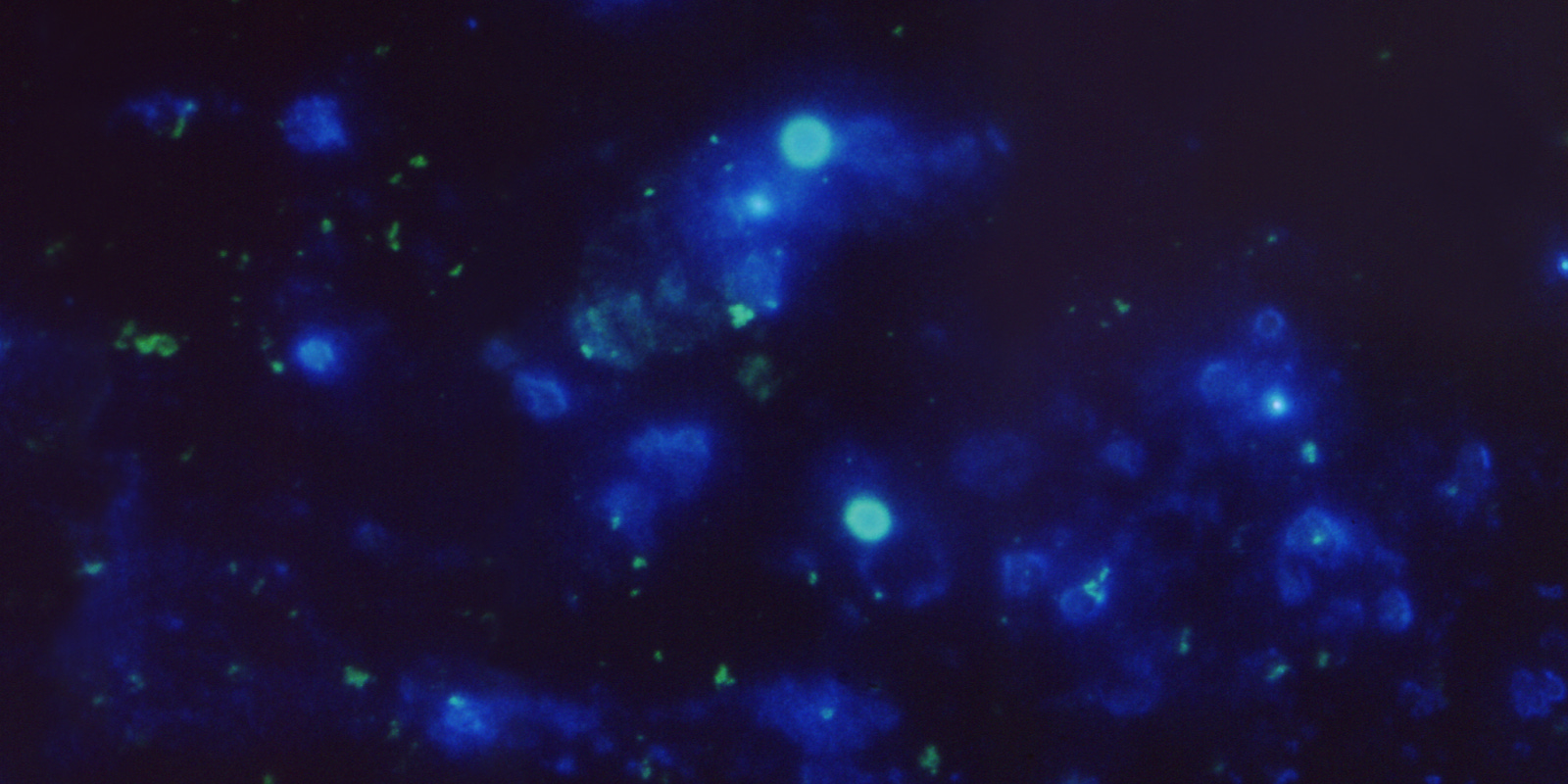
“Data on the role of the Earth’s magnetic field in the ontogenesis of various animals are presented. Possible mechanisms of the sensitivity of bacteria, plants, fungi, and animals to changes in the external magnetic field are discussed, including those under conditions in which the intensity of the geomagnetic field is decreased using various physical approaches (Helmholtz rings, shielding, etc.).” Interaction of cells and geomagnetic fields. (Credit: Irina V. Ogneva; Nikolay S. Biryukov, AIP)
Is Earth’s Magnetic Field Guiding Life Itself?
A 2023 paper published by AIP quietly adds weight to a growing idea: living cells don’t just survive in Earth’s geomagnetic field. They interact with it, respond to it, and in some cases, may even depend on it to develop correctly.
Researchers are observing that everything from bacteria to animals seems to react when Earth's magnetic field changes. Especially during early development. This isn’t just about bird navigation or magnetotactic microbes. It's about cells growing differently under altered magnetic conditions. It’s subtle. But it is consistent. It aligns with research on quantum-level sensing, magnetic resonance effects, and even changes in human physiology during geomagnetic storms.
The full text of the AIP paper is still behind a paywall for me. But what’s already available fits well with a non-conventional view. That life may be tuned into Earth’s fields in ways we don’t yet fully understand.
From the perspective of Predictive Evolution Theory (PET), framed within the Electric Universe (EU) model, this all starts to make sense. Earth’s magnetosphere acts less like a passive shell and more like a living feedback system. Broadcasting real-time environmental signals. Cells behave like tiny sensors predicting what’s coming next. They’re not just reacting. DNA becomes a kind of antenna. Sampling the geomagnetic weather to choose a path of development. Evolution, then, isn’t driven by chance mutations. It is shaped by structured, field-informed adaptation.
This might just mean we’ve been looking in the wrong place for the driver of life’s complexity. Maybe the key isn’t just hidden in the genes themselves. But also in the fields they’re tuned to.
How Cells React to Earth's Magnetic Field
In the 2023 study published in the AIP Conference Proceedings, researchers Ogneva and Biryukov explore how life (from microbes to animals) responds to changes in Earth’s geomagnetic field. They weren’t looking at behaviour or navigation this time. They were looking at the deeper stuff. Such as development, cell structure, and growth.
Using controlled environments where the geomagnetic field was either reduced or slightly modified, they tracked how cells behaved. The results? Lowering the magnetic field often disrupted normal development. Cells grew more slowly. They showed structural changes. And in some cases, they functioned abnormally. These effects weren’t limited to just one type of organism. They showed up across a wide biological spectrum. Suggesting that sensitivity to Earth’s magnetic field is a deeply rooted trait.
As for what’s causing it, the study points to possible disruptions in ion channels, cytoskeletal balance, or oxidative stress pathways. But it stops short of naming a single mechanism.
What’s clear is that Earth’s magnetic field isn’t just sitting there doing nothing. According to this research, it plays a subtle but significant role in shaping how cells grow and develop. Especially in the earliest stages of life. Still, the authors admit there's a lot more to figure out. And that untangling these effects from other environmental variables is tricky business.
It turns out we might not be the only ones paying attention to Earth’s magnetic environment. Cells and creatures of all kinds may be wired to sense and respond to it in surprising ways.
One of the more intriguing mechanisms involves something called the radical-pair effect. Certain molecules react differently depending on the orientation of the magnetic field. Especially when activated by blue light. This has been seen not only in birds but in muscle stem cells too. Tweak the magnetic field using specific frequencies, and the effect can disappear altogether. Suggesting a quantum-level sensitivity.
Then there are microbes called magnetotactic bacteria. These little swimmers grow magnetite crystals inside themselves. Tiny compass needles that line up with the geomagnetic field. These structures help them navigate toward low-oxygen areas. Interestingly, similar magnetite-like particles have been found in the human brain. According to the mainstream, no one knows exactly what they're doing there.
When organisms are placed in artificially weak magnetic fields (much lower than Earth’s natural background), things start to break down. In animals like zebrafish and mice, development gets disrupted, cognitive function suffers, and tissue regeneration slows. What’s even more curious is how sensitive these effects are to small changes. Shift the magnetic intensity by just a fraction, and the biological responses flip.
Another idea, known as ion cyclotron resonance, suggests that certain ions like calcium may resonate with geomagnetic-level fields. This resonance could affect things like molecular transport, membrane permeability, and even how cells communicate electrically. All from tiny shifts in the surrounding magnetic environment.
And it’s not just cells or microbes. Humans also show signs of being affected. During geomagnetic storms, studies have found changes in blood pressure, heart rate variability, clotting, and even cardiovascular stress levels. These effects often show up with a time delay and seem to hit sensitive individuals harder.
So while the field around us might seem invisible and passive. There is growing evidence that biology might be tuned into it far more intimately than we thought. Not just animal behaviour. But life at the cellular level.
Connecting the Dots with Ogneva & Biryukov’s Work
While the AIP paper doesn’t go all that deep into experimental detail, it clearly draws from a broad pool of evidence. Linking animals, plants, fungi, and even bacteria to geomagnetic sensitivity. What stands out is the paper’s effort to bring these threads together. It’s not just about one mechanism. It references everything from “quantum effects” like the radical-pair process to biomagnetic inclusions like magnetite. As well as broader resonance-based responses. The central theme? Developmental biology doesn’t happen in isolation. It is unfolding inside an electromagnetic context shaped by Earth’s field.
That said, a few questions remain open. What kind of experimental support is there for magnetic effects in bacteria and fungi? Are we looking at real, measurable shifts in growth rates or cell behaviour? Did they run shielded vs. unshielded comparisons using specific magnetic intensities? And do certain species show clearer patterns than others?
We also don’t yet know which detection pathways are dominant. Does a fish embryo rely more on ion resonance? Does a fungus lean on magnetic inclusions? Is there a magnetic “dose-response” curve? A sensitivity window during development? All of these questions point to the need for tighter, more comparative studies. And perhaps an entirely new paradigm… You know where I’m going with this.
Even with those gaps, there’s plenty to work with. Especially if you're building a framework grounded in Electric Universe ideas. If Earth’s magnetic field acts as a regulator. Not just a backdrop. Then ontogenesis itself could be influenced by fluctuations in that field. “Quantum effects” like radical-pair reactions, magnetosomes guiding cells, or subtle ionic resonances could all act as electromagnetic tuning forks inside living systems.
This is exactly the kind of terrain where PET, the Electric Universe model, and the concept of information reservoirs converge. The findings of Ogneva & Biryukov (2023) don’t just fit. They point the way. If we stop treating Earth’s geomagnetic field as a passive background and instead recognize it as an active, information-rich system. Then the field becomes part of a resonant, dynamic web that life is tuned into. Cells aren’t just reacting. They are gathering predictive data from that field. That’s where we’re headed next.
How PET and the Electric Universe Explain Geomagnetic Sensitivity
In Predictive Evolution Theory (PET), DNA functions as an information processor. Coupling with electromagnetic fields to receive data about environmental shifts. Using this information, organisms generate multiple predictive variants per generation as evolutionary contingency plans. The variant that best matches real-world changes survives. While the others are discarded.
Organisms receive information about other organisms. Including “blueprints” in the form of data packets. Enabling DNA-level adaptations. Like mimicry or novel traits. This process forms a continuous feedback loop. In which organisms not only adapt but also upload new data back into the environmental electromagnetic fields. Maintaining a dynamic information exchange between matter, energy, and life.
In PET, Earth’s magnetic field isn’t just background noise. It is a stream of environmental information. DNA is seen as a biological antenna (hydrogen vortices). Constantly picking up these signals and using them to guide development and adaptation. Even species-level changes. When the signal is weak or scrambled, the predictive system falters. Development stalls. Stress responses misfire. And biological coherence is lost.
From an Electric Universe standpoint, Earth’s geomagnetic field is like a living structure. Formed and maintained by electric currents flowing through space. Specifically, Birkeland currents. This isn’t metaphorical. These plasma-driven systems organize and shape the conditions for life. Not just magnetospheres. Biological systems, under this view, don’t evolve randomly. They emerge in resonance with electromagnetic scaffolding. Life doesn’t just adapt to a field. It is wired into it from the start.
The Ogneva & Biryukov study helps ground all this in observable biology. They show that when the geomagnetic field is reduced or altered, cells behave differently. Growth slows. Structures misalign. Developmental patterns shift. Organisms respond to geomagnetic signals and predict outcomes.
This is potentially how we find rapid speciation following the mass extinction events during the Younger Dryas period. This also meets PET’s proposal that species can evolve within a single generation. By downloading and integrating environmental and interspecies information from electromagnetic fields. Enabling rapid, adaptive changes without requiring slow, gradual mutation over time.
Ogneva & Biryukov’s observations hold true across bacteria, fungi, plants, and animals. It’s not isolated. It is systemic. Their work doesn’t just confirm sensitivity to Earth’s field. It strongly implies that this field is an integral part of life’s blueprint. An information reservoir, as I like to call it.
In Predictive Evolution Theory, DNA isn’t just a static blueprint. It’s actively tuning into and resonating with ambient electromagnetic signals. Including Earth’s magnetic field. Ogneva’s study reflects this idea. Showing that cells change their development depending on magnetic conditions. This suggests DNA behaves more like a signal processor than a simple chemical machine.
Magnetoreception isn’t just about navigation in animals, plants, and bacteria. It’s a form of ongoing feedback. A way organisms track their position and timing in their environment. PET sees this as a crucial anchoring system. Helping life predict what’s coming next by knowing exactly where and when it exists.
When the geomagnetic field is reduced or shielded. It is like cutting off an organism’s access to essential predictive data. Ogneva’s work shows that losing this feedback impairs cell growth, orientation, and function. From the Electric Universe angle, magnetospheres rely on electric currents. Remove the field and the whole electromagnetic structure that organizes life begins to collapse.
The Earth is part of a vast plasma circuit. With its magnetic field shaped by Birkeland currents linking it to the Sun and beyond. PET describes life as existing within nested layers of information fields. With the planetary magnetosphere as a key layer. When this layer is disrupted, the effects cascade through bioelectric and developmental systems. Altering how life forms grow and adapt.
Embryogenesis, in this view, is really about decoding signals from environmental fields. When those fields shift or weaken, development shifts right along with them. Magnetic events like reversals or storms could trigger rapid bursts of speciation and variation. Organisms aren’t just randomly changing. They are switching their internal prediction templates based on new electromagnetic information.
Our modern world, filled with artificial electromagnetic environments, might be causing what is called “field dyslexia.” This scramble of natural signals could help explain some of the developmental disorders and health anomalies we see today. Even big life events. Like species migration. Reproduction timing. Tissue regeneration. They all seem linked to how organisms read and predict changes in geomagnetic and solar rhythms.
Here’s a fresh hypothesis from combining PET and Electric Universe ideas.
Geomagnetic fields act as real-time feedback nodes for life’s predictive computations. When these fields get disrupted or altered, organisms don’t just malfunction randomly. They generate new developmental predictions. Some of these changes fit the bigger picture and are adaptive. Others clash and lead to dysfunction. It’s all about how well the internal biological signals sync with the larger cosmic electric system.
Embracing Our Electric Connection: The Universe as a Living Electromagnetic Circuit
The Electric Universe theory within the plasma cosmology framework isn’t just some wild and fantastical idea. It is a powerful, elegant way to understand how life and the cosmos truly work. This isn’t about random chance or chemical accidents. It’s about deep, dynamic interactions between energy and information. Carried by electric currents and magnetic fields alternating together in perfect duality. Or, as Denis Pelletier would say, “All is Dual Supersession.”
If the universe is electric (which it is), then everything in it is electromagnetic at its core. Electricity and magnetism are two sides of the same cosmic coin. Electricity is the dual supersession of energy and information. Electric currents generate magnetic fields, and magnetic fields guide electric currents. This dual supersession is called electromagnetism. And its interplay forms the electromagnetic spectrum. And is the very foundation of all matter that emerges from the invisible substrate of information and energy.
What we see (stars, planets, cells, DNA, even consciousness) arises from this fractal, nested web of electromagnetism. A cosmic circuit connecting everything and everyone. This is the true "Way". The pulse of the Universe. The living Aether. The underlying code of the grand Simulation. Or simply the electric breath of God. Call it what you will.
So here’s my call to action for all readers. Let’s stop seeing ourselves as isolated blobs of chemistry and start embracing our electric connection to the cosmos. Our bodies. Our planet. The vast Universe itself. We are all wired together by these energetic flows. By tuning in to this electric reality, we open doors to new understanding. New possibilities. And a profound respect for the invisible currents shaping everything. This is the Way.
The Universe is electric. If it’s electric, it’s electromagnetic. And if it’s electromagnetic, then it’s alive with information and energy. And infinite potential.
References
Ogneva, I. V., & Biryukov, A. A. (2023). Interaction of cells and geomagnetic fields. AIP Advances, 13(1), 180002. https://doi.org/10.1063/5.0133537
Liboff, A. R. (2017). Ion cyclotron resonance in biological systems. Electromagnetic Biology and Medicine, 36(1), 1–8.
Ritz, T., Thalau, P., Phillips, J. B., Wiltschko, R., & Wiltschko, W. (2004). Resonance effects indicate a radical-pair mechanism for avian magnetic compass. Nature, 429(6988), 177–180.
Kirschvink, J. L., Walker, M. M., & Diebel, C. E. (2001). Magnetite-based magnetoreception. Current Opinion in Neurobiology, 11(4), 462–467.
Persinger, M. A. (2013). Geomagnetic activity and cardiovascular health: A review of epidemiological studies. International Journal of Environmental Research and Public Health, 10(8), 3797–3817.