
Peptides Decoded
Exploring how the body's molecular messengers regulate life and how Predictive Evolution Theory reframes them as biological information transducers

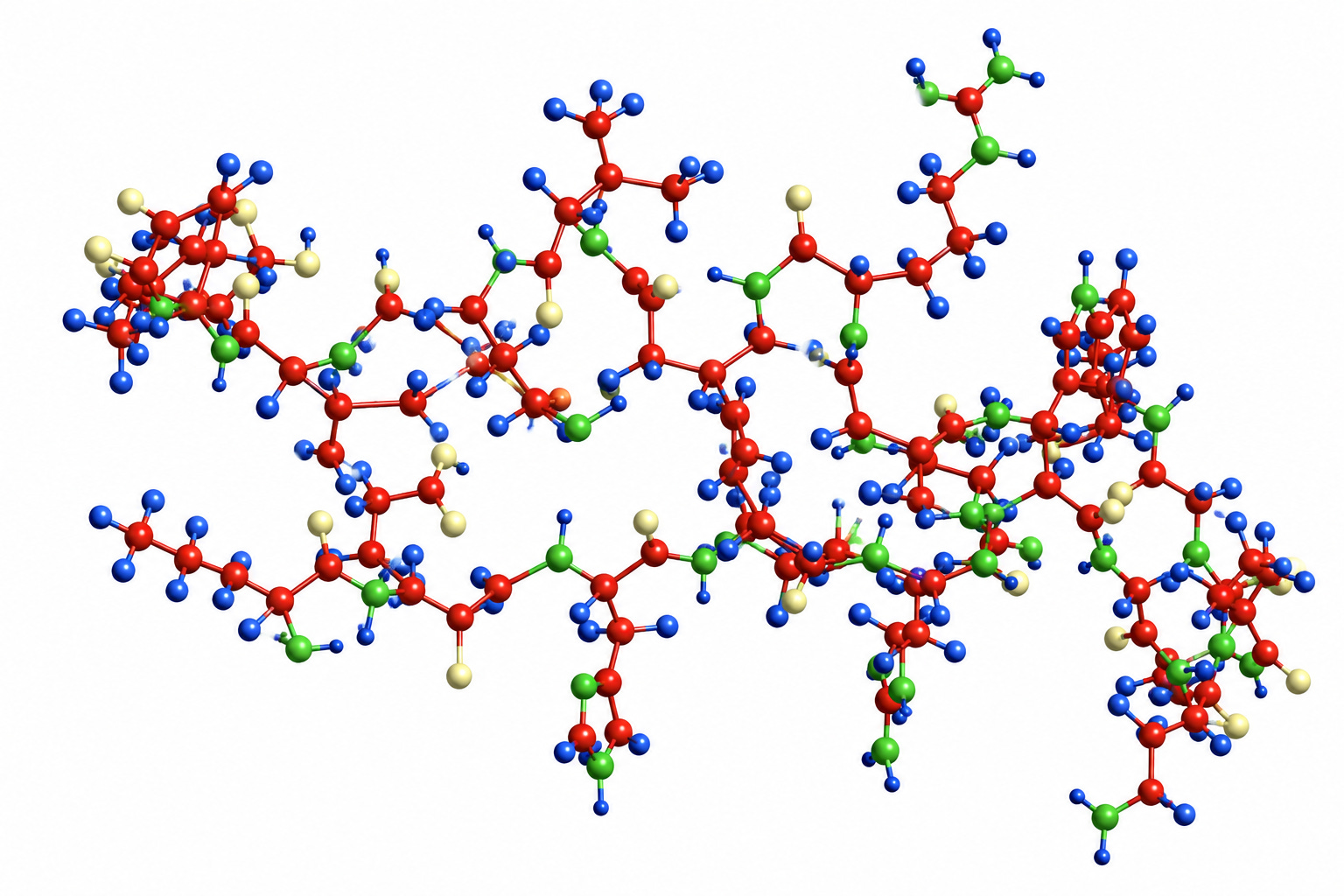
The Messenger System
Peptides are short chains of amino acids that function as highly specific biological messengers, enabling cells to communicate and coordinate processes such as growth, repair, metabolism, hormone regulation, and immune function.
Conventional biology explains these molecules in terms of biochemical signaling and receptor interactions, but this raises a deeper question:
What organizes peptide signaling so precisely across billions of cells?
Predictive Evolution Theory (PET) offers an additional layer of interpretation by viewing peptides as information transducers within a hierarchy that begins with the information-energy substrate and progresses through electricity, plasma, electromagnetic structures, and biofields.
In this framework, peptides do not generate biological intelligence themselves.
Instead, they convert electromagnetic and informational organization into coordinated biochemical action, providing a bridge between information and matter through the continual process of Dual Supersession.
What Are Peptides?
Peptides are short chains of amino acids, the same building blocks that make up proteins. The main difference between the two is size. Peptides typically contain between two and fifty amino acids, whereas proteins are generally much larger and folded into more complex three-dimensional structures.
In the body, peptides function primarily as signaling molecules.
They act as biological messengers, allowing cells to communicate with one another and coordinate a wide range of physiological processes.
Naturally occurring peptides include insulin, which regulates blood sugar; glucagon, which raises blood sugar; oxytocin, which plays a role in social bonding and childbirth; and collagen peptides, which contribute to the structure and maintenance of connective tissue.
Most peptides work by binding to specific receptors on the surface of cells, much like a key fitting into a lock. This interaction triggers a response within the cell, influencing processes such as tissue repair, hormone release, inflammation, metabolism, appetite regulation, and immune function.
Because of their precise signaling abilities, scientists have developed synthetic peptides that mimic or modify the actions of naturally occurring peptides.
Some have become approved medicines for conditions such as diabetes, growth hormone deficiencies, osteoporosis, certain cancers, and rare metabolic disorders. Others are still being investigated for potential roles in wound healing, muscle preservation, and age-related conditions, although many of these applications remain experimental.
Peptides are also widely available in supplements, creams, and injectable products.
It is important to distinguish between these categories. Collagen peptide supplements are commonly used to support skin and joint health, while prescription peptide drugs have undergone regulatory evaluation for specific medical conditions.
In contrast, many research peptides sold online have not been thoroughly tested for safety, effectiveness, or quality.
In simple terms, peptides are small chains of amino acids that help cells communicate and coordinate countless functions throughout the body. Their ability to act as highly specific biological messengers makes them essential for normal physiology and valuable tools in modern medicine.
Peptides in PET
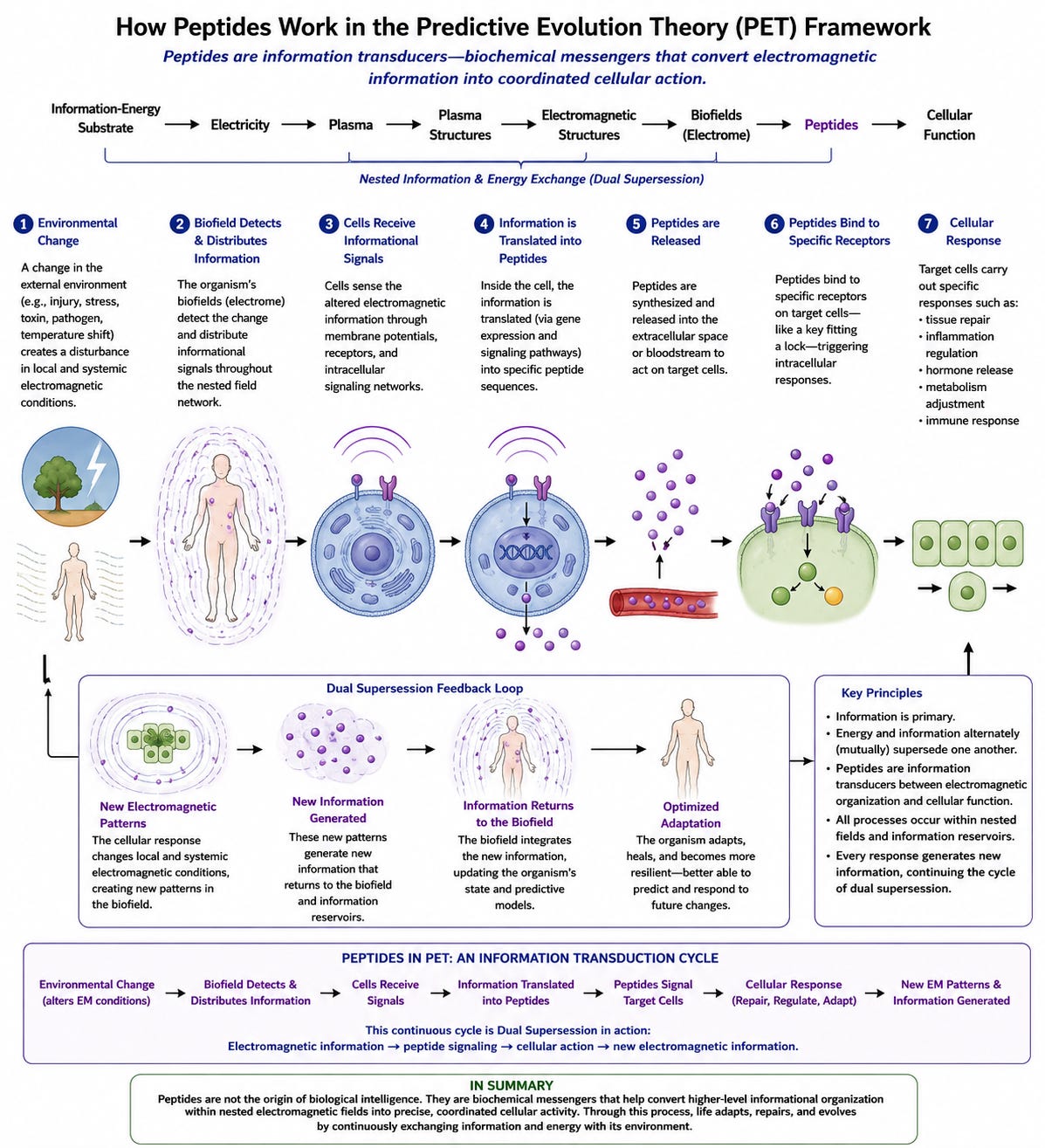
Within Predictive Evolution Theory (PET), peptides are interpreted as biological information carriers that translate electromagnetic organization into biochemical action.
They occupy a specific place in the emergence hierarchy:
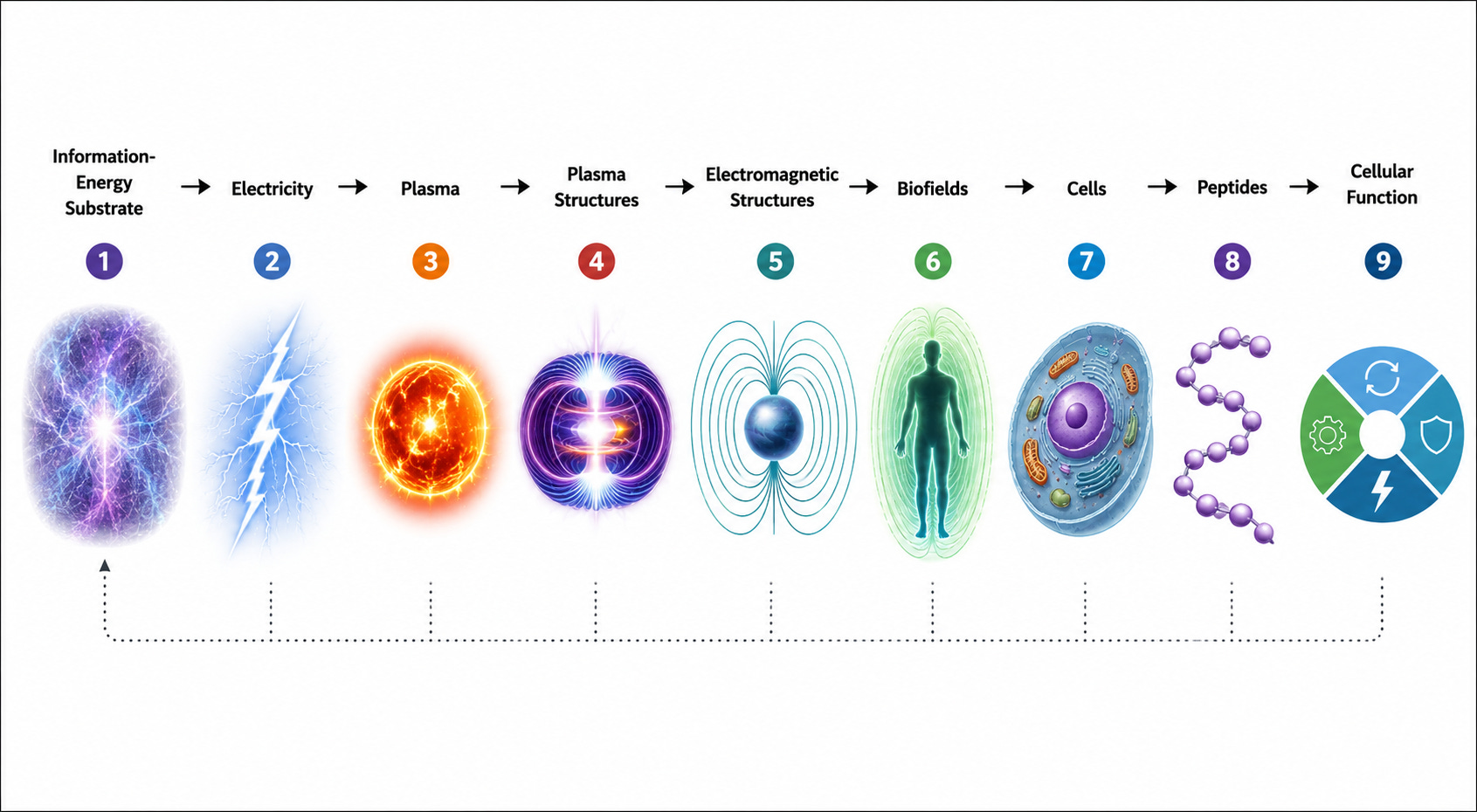
In this framework, the information-energy substrate contains the potential for all biological organization. Through the process of Dual Supersession, information and energy reciprocally supersede one another, giving rise to electricity, plasma, and increasingly organized structures.
Living cells exist within nested biofields, continuously exchanging information with both their internal and external environments.
Peptides serve as one of the biochemical languages through which cells convert electromagnetic and informational states into coordinated physiological responses.
Rather than acting as isolated chemicals, they are material expressions of informational processes occurring within the organism’s electrome, translating higher-level organization into precise cellular activity.
When tissue is damaged, the local electromagnetic environment changes. The biofield detects and distributes this information throughout the organism, prompting cells to produce and release specific peptides.
These peptides bind to target cells and direct processes such as cell division, migration, tissue repair, inflammation regulation, and metabolic adjustment. As healing progresses, the repaired tissue generates new electromagnetic patterns that feed fresh information back into the biofield.
This continuous cycle illustrates another example of Dual Supersession:
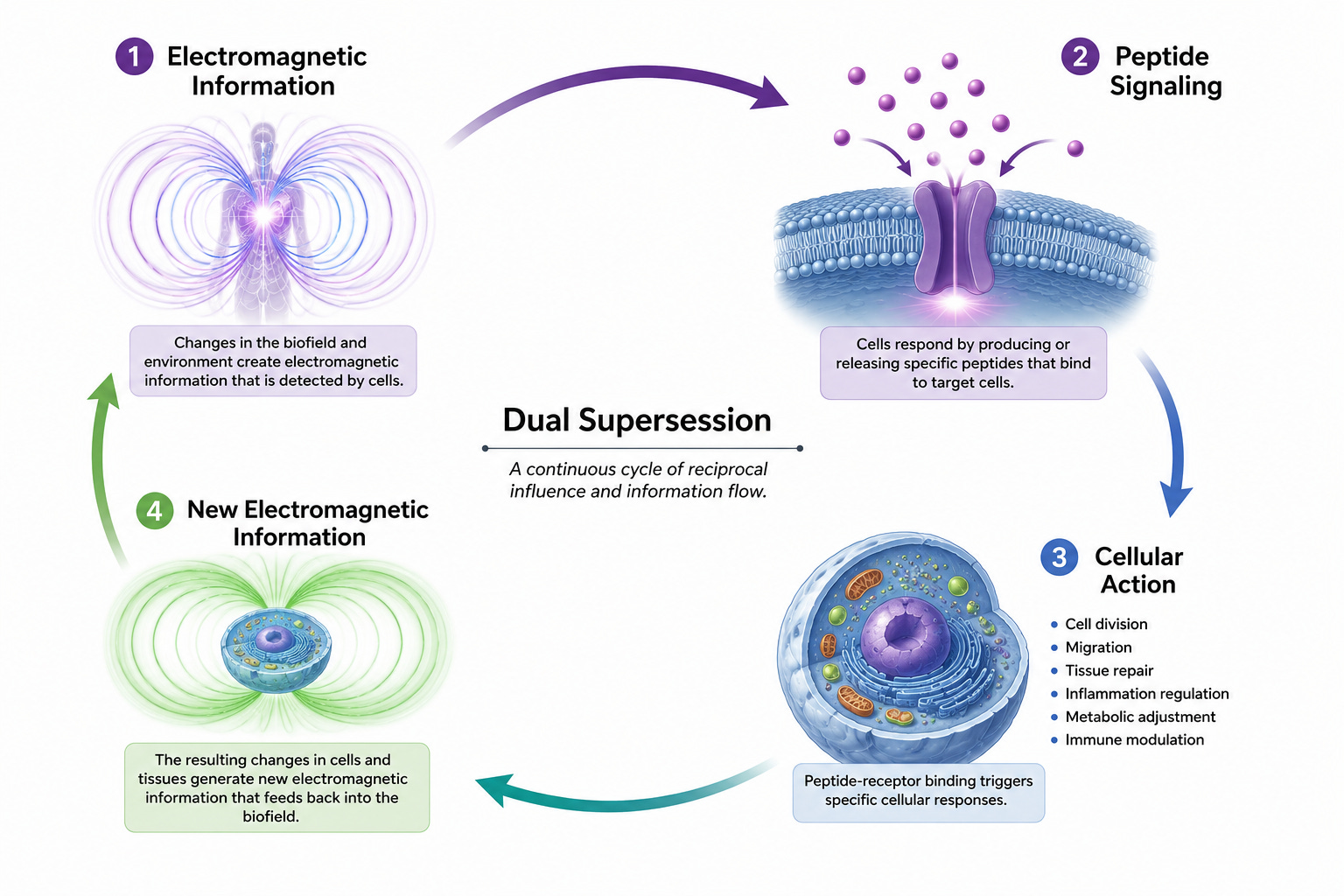
From the perspective of PET, peptides are not the source of biological intelligence but information transducers.
They function as interfaces between information and matter, enabling the electrome to regulate growth, repair, adaptation, and homeostasis by converting electromagnetic information into coordinated biochemical activity.
Beyond Biochemistry
Peptides are essential biological messengers that enable cells to communicate and coordinate the body’s many functions. Conventional biology describes them as signaling molecules that bind to cellular receptors to regulate growth, repair, metabolism, immunity, and other physiological processes.
Predictive Evolution Theory extends this understanding by proposing that peptides are information transducers rather than merely chemical messengers.
Within the PET emergence hierarchy, they convert electromagnetic and informational organization into coordinated biochemical activity, linking biofields with cellular function.
In this way, peptides become a bridge between information and matter, illustrating how Dual Supersession continually transforms information into biological action and biological action into new information.
References
Alberts, B., et al. (2022). Molecular Biology of the Cell (7th ed.).
Nelson, D. L., & Cox, M. M. (2021). Lehninger Principles of Biochemistry (8th ed.).
Hall, J. E. (2020). Guyton and Hall Textbook of Medical Physiology (14th ed.).
Fosgerau, K., & Hoffmann, T. (2015). Peptide therapeutics: current status and future directions. Drug Discovery Today, 20(1), 122–128.
Muttenthaler, M., et al. (2021). Trends in peptide drug discovery. Nature Reviews Drug Discovery, 20, 309–325.
Drucker, D. J. (2018). Mechanisms of Action and Therapeutic Application of GLP-1. Cell Metabolism, 27(4), 740–756.
Shoulders, M. D., & Raines, R. T. (2009). Collagen Structure and Stability. Annual Review of Biochemistry, 78, 929–958.